
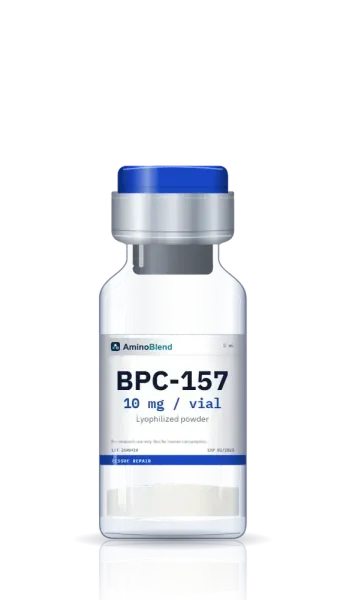
BPC-157
From $69
Research use only. AminoBlend supplies research compounds for laboratory and in-vitro use, not for human or animal consumption. By continuing you confirm you are 18 or older and buying for research.
Peptides for skin, sometimes searched as peptides for the skin or simply skin peptides, come in two very different forms. One is the peptide serum, eye cream or moisturiser on a pharmacy shelf, where a few named peptides sit inside a cosmetic formula. The other is the research peptide: a single compound sold as freeze-dried powder with a certificate for its lot. AminoBlend sells only the second kind. This guide explains the first so a label can be read properly, then sets out which research peptides labs studying skin biology actually buy.
So what are peptides for skin, in plain terms? They are short amino acid chains that a formula uses as a messenger, a copper carrier or a nerve-signal blocker, or that a lab uses as one defined test compound. Whether the search is peptide for skin, peptides skin or peptides on skin, the useful next question is which of those two worlds the product belongs to.
A peptide is a string of amino acids held together by peptide bonds, normally under about 50 residues long. Collagen, elastin and keratin are proteins built from much longer chains. Peptide skin care is built on that idea. When a cosmetic chemist adds peptides to skin care products, the idea is that a short fragment can act as a signal, carry a trace metal, or interfere with a specific protein, at a concentration low enough to stay stable in a cream.
Cosmetic science usually sorts skin care peptides into four groups:
Skin care products with peptides rarely hold just one group. A typical night cream pairs a signal peptide with a neurotransmitter-type one, and people comparing peptide products for skin, or typing peptide products skin care into a search bar, are usually holding two such jars and trying to tell them apart. Other skin products with peptides, such as cleansers and toners, rinse off or evaporate within minutes, so formulators spend most of their peptide budget on leave-on serums and creams.
For the vocabulary behind these names, including the difference between a peptide, a polypeptide and a protein, see the peptide glossary.
The honest answer is that it depends entirely on the peptide, the concentration and whether it reaches living cells. Most peptides are too large and too water-loving to cross the outer layer of the epidermis easily, which is why formulators attach fatty acid chains (the palmitoyl prefix) or use liposomes. The controlled studies that exist are generally small, short and often sponsored by the ingredient maker. They typically measure wrinkle depth by imaging, elasticity with a suction device called a cutometer, or dermal density by ultrasound.
People ask what peptides do for the skin, or in the singular, what does peptide do to skin, and online lists of peptides for skin benefits tend to blend three sources: cell culture findings, small sponsored cosmetic trials and marketing copy. Only the first two involve measurement. Carton phrases such as peptides for skin health, skin rejuvenation peptides and peptides for skin tightening have no defined meaning under Australian cosmetic rules. Once a product claims to repair or regenerate tissue it has made a therapeutic claim, which puts it under the TGA rather than the cosmetics framework.
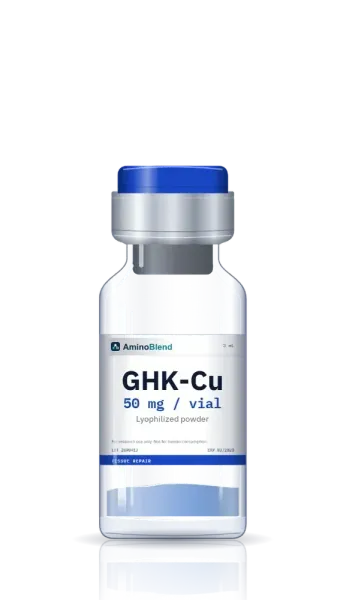
GHK-Cu has the deepest laboratory literature of any skin peptide, from fibroblast collagen synthesis in the 1980s to gene expression work decades later. That is why it shows up in both a copper peptide serum and a research lab. Read what GHK-Cu is for the detail, and the copper peptide before and after studies for what controlled trials actually measured.
Collagen peptides are a separate product class again. They are hydrolysed collagen sold as a powder to stir into drinks, made of many fragments of varying length rather than one named sequence. A topical signal peptide such as palmitoyl pentapeptide-4 is a single defined molecule used at low concentration. Our guide to Vital Proteins collagen peptides and other collagen powders covers that category and how it compares with research peptides.
Topical collagen products are different again. A collagen peptide serum or a collagen cream with peptides normally uses hydrolysed or soluble collagen as a film-former and humectant at the surface, with any signal peptide listed separately on the INCI panel; jars labelled collagen peptides cream follow the same pattern. Korean ampoules stretch the naming further. The deep collagen silk peptide intensive ampoule, for instance, puts collagen and a silk-derived peptide in its title, and only the ingredient list shows where each one sits. AminoBlend sells none of these products. For laboratory work on collagen synthesis itself, the defined reagent is GHK-Cu copper tripeptide.
A peptide serum is a light, water-based cosmetic carrying one or more of the peptides above. Multi peptide serums combine several, often a signal peptide with a neurotransmitter-type peptide and hyaluronic acid. Budget brands sell peptide serums too: The Ordinary multi peptide serum range includes versions for the face, the eyes and lashes, some with added copper peptides, and the same category runs up to clinic brands. Copper peptide serums list copper tripeptide-1 on the label and are covered in depth in our GHK-Cu serum guide.
Search phrasing splits the category several ways. Someone typing peptide serum for face, face peptides serum or simply serum peptide wants a leave-on facial product; peptide serum for skin is the broader version, and serum peptides is how the same search often looks when typed in a hurry. An anti aging peptide serum is the same product with an appearance claim on the front. A multi peptide HA serum adds hyaluronic acid as the humectant, while a retinol and peptide serum puts a vitamin A derivative in the bottle as well, so its pH and antioxidant system have to suit both actives. Labels that mention peptide serum botanicals simply pair peptides with plant extracts. Copper formulas get typed in reverse just as often, as peptides copper serum or copper serum peptide, and the INCI name to look for in either case is copper tripeptide-1.
Korean peptide serums follow the same chemistry but often add ingredients popular in that market. The Medicube PDRN pink peptide serum is a good example of why labels matter: PDRN stands for polydeoxyribonucleotide, a mixture of DNA fragments usually taken from salmon, which is not a peptide at all. The peptide content of a product like that sits elsewhere on the ingredient list. Searches for a PDRN pink peptide eye cream point to the same pairing in a richer eye-area base. A Korean formula is often thinner than its Western equivalent and designed to be layered under a cream, so judge it as one step of a routine rather than a standalone product.
Shoppers searching for the ordinary peptide serum, medik8 liquid peptides or a cosrx peptide skin booster are usually comparing finished cosmetics, not single compounds. The table sorts the most searched names by what kind of product they are. We have left exact ingredient lists out on purpose: formulas change between batches and markets, so the carton in hand is the only reliable source.
| Product as searched | What kind of product it is | What to check on the carton |
|---|---|---|
| The Ordinary Multi-Peptide + HA Serum (sold earlier as Buffet) | Water-based face serum pairing several peptides with hyaluronic acid | Whether you hold this one or the copper version, which has a different name |
| The Ordinary Multi-Peptide Eye Serum | Light serum for the eye area | Peptide INCI names and any caffeine listed beside them |
| The Ordinary Multi-Peptide Lash and Brow Serum | Conditioning serum applied along lashes and brows | The conditioning peptide named on the label |
| Medik8 Liquid Peptides | Multi-peptide face serum from a UK clinic brand | How many peptides are named and how high they sit in the list |
| Olay Regenerist Collagen Peptide 24 | Moisturiser and serum line named after a collagen-derived peptide | The peptide INCI name behind the marketing name |
| COSRX The 6 Peptide Skin Booster Serum | Thin booster serum named for six peptides | The six INCI names and the preservative system |
| Medicube PDRN Pink Peptide Serum | Korean serum combining PDRN with peptides | PDRN is a DNA ingredient; find the peptides separately |
| Naturium Multi-Peptide Serum | Multi peptide serum from a US brand | Peptide position relative to the fragrance and preservatives |
Search phrasing varies a lot here. People type peptide serum the ordinary, ordinary peptide serum, serum multi peptides and peptides serum for what is often the same bottle, and olay collagen peptide or olay super collagen peptide for products in one Olay line. Medik8 peptides and the medik8 peptide serum searches point back to the Liquid Peptides formula in most cases. Allies of Skin peptides products sit at the premium end of the same idea.
We do not rank cosmetic serums, and no single one is best for every purpose. The useful checks are the same for any of them:
The same four checks settle the best peptide moisturiser question, since a moisturiser is mostly a heavier base around the same actives. Searches for the best moisturizer with peptides and ceramides (most people type the American spelling) add one variable: ceramides are lipids native to the outer barrier, so the occlusive base matters as much as the peptide. Named products deserve the same scrutiny. A peptides 10 lifting serum advertises a count of peptides, which says nothing about how much of each is present, and the revitalift laser tri peptides age correcting serum names three peptides in its title without stating their levels on the front.
A peptide eye cream or peptide eye serum is the same idea in a richer base, formulated for the thinner tissue around the eye and tested for eye irritation. Signal peptides and acetyl hexapeptide-8 are common choices, often alongside caffeine or niacinamide. Multi peptide eye serums from mainstream brands, and hydrogel eye patches loaded with peptides and collagen, are cosmetics in the same way. None of the AminoBlend range is an eye product, and our research vials must not be used near eyes or on people.
Whether a carton says eye cream with peptides, peptides eye cream or eye serum with peptides, the format question is simply cream versus serum, and only the INCI panel answers the peptide question. A peptide collagen eye patch is a hydrogel sheet soaked in a similar solution and left in place for a short time before being peeled off.
The eye category is crowded with similar names: the ordinary multi-peptide eye serum, COSRX Advanced Snail Peptide Eye Cream, the JSHealth illuminating peptide eye serum and Revox multi peptide eye products all sit on Australian shelves. Each is a formulated cosmetic. Reading the INCI list is the only way to tell which peptides a given multi peptide eye serum actually carries.
The rhode lip peptide treatment and the mcobeauty peptide lip treatment are balms, not serums. The peptide sits in a wax and oil base built to stay on the lips, so the concentration and the purpose differ from a face serum. As with any lip product, the ingredient list on the tube, not the name, says which peptide is present.
The Ordinary Multi-Peptide Serum for Hair Density is one of the most searched skincare products in Australia. Hair serums of this type pair several plant extracts with peptide complexes and are sold as cosmetics for the scalp. Peptide lash serums usually rely on a conditioning peptide such as myristoyl pentapeptide-17. Copper peptide hair serums use copper tripeptide-1.
The search terms are messy. Shoppers type hair peptide serum, densitymulti peptide serum for hair density when a product name is pasted without its spaces, or the original multi peptide hair serum when they want a first formula rather than a later version. The multi peptide lash & brow serum is the smaller sibling, applied along the lash line with a fine brush.
Most reviews of the ordinary multi peptide hair serum are written by individual buyers after a few weeks of use, with photos taken in different light and at different hair lengths. That makes them useful for texture, scent and how the dropper behaves, and close to useless as evidence about follicles. A controlled study counts hairs in a fixed, tattooed scalp area under standard lighting; a review cannot. Treat the ordinary peptide hair serum, and any copper peptide hair product, as a cosmetic whose reviews describe experience rather than measurement.
On the research side, GHK-Cu and thymosin beta-4 have been studied in dermal papilla cells, isolated follicles and mouse hair cycle models. Our skin and hair peptides category covers that work and the compounds involved. Labs studying peptides for skin and hair in a single programme often start with GHK-Cu, because the one compound appears in both literatures.
Searches for injectable peptides for skin, or peptide injections for skin tightening, usually lead to clinics and social media rather than published trials. Queries worded as peptides for skin injection or peptides injections for skin get the same answer from us: we supply no injectable product and publish no human protocol. No peptide sold as a research chemical, GHK-Cu included, is registered with the TGA for injection to improve skin. AminoBlend sells sealed lyophilised vials for in vitro and laboratory research and declines orders that indicate personal use. Our GHK-Cu side effects page summarises what is and is not known about injected use.
When a laboratory studies peptides and skin, it needs a defined compound at a known purity, not a finished formula. These are the skin research peptides we stock, each tested per lot:
For skin tightening and elasticity research, the published models are mostly fibroblast cultures measuring collagen and elastin, and GHK-Cu is the compound with the longest record in them.
Where to buy peptides for skin depends on which kind you mean. A cosmetic peptide serum comes from a pharmacy, department store or brand website. A research peptide comes from a supplier that publishes a certificate of analysis for every lot, as we do in our COA library. Our page on lab tested peptides explains what each certificate covers, and the peptides for sale in Australia overview compares the whole range by research area. Browse the full skin and hair peptides range, or start with the GHK-Cu starter kit, which includes the vial and reconstitution supplies. Shop these vials online from our Australian stock, and if you pick a single vial rather than the kit, buy a 3 mL or 10 mL bacteriostatic water vial in the same order. Every AminoBlend product is sold for laboratory research use only, to buyers aged 18 and over, and none is TGA approved.
A reta peptide serum does not exist as a cosmetic category: retatrutide is a metabolic research compound with no skin care use, so serums sold for skin rely on the signal, carrier and neurotransmitter-type peptides described above.
Most of the published work runs in dermal fibroblasts, the cells that make collagen and elastin, and in keratinocytes, the cells of the outer layer. Beyond single cell types, researchers use reconstructed skin equivalents grown in culture, small explants of donor skin kept alive in the lab, and wound models in rodents. Each model answers a narrower question than a cosmetic claim implies.
A serum lists its peptide by name and position, but rarely by exact amount, and the amount reaching living cells through the outer layer is smaller again. A culture experiment works the other way round: a known concentration of a pure compound is added straight to the cells. That gap is why a strong cell result for a peptide says little about a finished cosmetic containing it.
The blue GHK-Cu cake is kept at minus 20 °C until needed, then dissolved in bacteriostatic water to give a clear blue stock solution. That stock is held at 2 to 8 °C, shielded from light and used within 28 days, while working dilutions for the culture are made from it. The GHK-Cu calculator sets out the stock concentration for either fill.
AminoBlend makes no serums, eye creams, hair products or other cosmetics, and none of its vials is formulated for application to people. What it supplies for skin biology is single defined compounds and blends as lyophilised powder, each lot carrying a certificate of identity and purity.
A peptide in skin care products is a short chain of amino acids added to a cream or serum at low concentration. The main types are signal peptides such as palmitoyl pentapeptide-4, carrier peptides such as copper tripeptide-1, neurotransmitter-inhibiting peptides such as acetyl hexapeptide-8, and enzyme-inhibiting peptides derived from plant proteins.
No. We sell research peptides as lyophilised powder in sealed vials, such as GHK-Cu and KPV, for laboratory use only. We do not sell serums, eye creams, hair serums or any cosmetic, and our vials are not for use on people.
No. PDRN is polydeoxyribonucleotide, a mixture of DNA fragments usually derived from salmon. Serums sold as PDRN peptide serums contain it alongside separate peptide ingredients, which appear under their own INCI names on the label.
Buy them online from AminoBlend, which keeps GHK-Cu, KPV, glutathione and the GLOW and KLOW blends in Australian stock. GHK-Cu is the compound most skin biology labs start with, at $49 for 50 mg. Each lot has an independent identity and purity certificate you can open before you order, and every vial is sold for laboratory research only, never as a cosmetic.
No. The Ordinary peptide serum range is a finished cosmetic that blends several peptides with hyaluronic acid, preservatives and other ingredients for application to the face. A research peptide is one defined compound, such as GHK-Cu, supplied as lyophilised powder with a certificate of identity and purity, for laboratory work only and never for use on people.
They are different things. Collagen peptides are hydrolysed collagen powders, a mix of many protein fragments of varying length sold as food products. Skin care peptides are single named sequences, such as acetyl hexapeptide-8, added in small amounts to creams. Both are made of amino acids, but the size, purity and purpose are not comparable.
10 mg vial
