
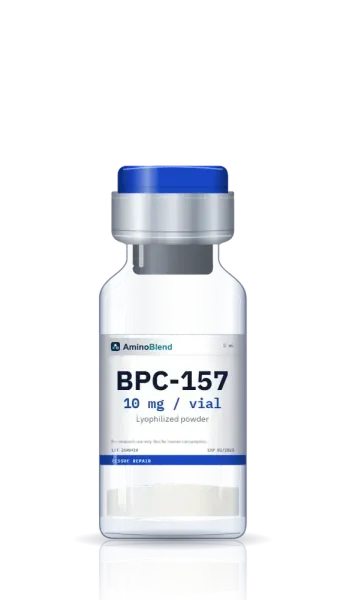
BPC-157
From $69
Research use only. AminoBlend supplies research compounds for laboratory and in-vitro use, not for human or animal consumption. By continuing you confirm you are 18 or older and buying for research.
Keep unopened lyophilised peptides sealed, dry and dark in a freezer at -20 °C if they will sit for more than a month, or in a fridge at 2 to 8 °C if you plan to use them within a few weeks. After reconstitution, store the solution at 2 to 8 °C, out of the light, and finish it within about four weeks when it was made with bacteriostatic water. If it needs to last longer, split it into single-use portions and freeze them. Heat, moisture, light, oxygen and repeated freeze-thaw cycles are what shorten a peptide's working life, and each section below deals with one or more of them.
These are the planning windows we use for our own stock. They are conservative figures rather than guarantees for every sequence, and published stability data for a specific compound always overrides them.
| Form | Temperature | Light | Typical working window |
|---|---|---|---|
| Lyophilised, sealed | -20 °C freezer | Dark | Long term, up to the label expiry |
| Lyophilised, sealed | 2 to 8 °C fridge | Dark | A few weeks |
| Reconstituted in bacteriostatic water | 2 to 8 °C fridge | Dark | About 28 days |
| Reconstituted in sterile water | 2 to 8 °C fridge | Dark | A few days |
| Single-use aliquot | -20 °C freezer | Dark | Weeks to months, thawed once only |
| Any solution left on the bench | Room temperature | Any | Hours, so return it to the fridge |
A freeze-dried cake has had almost all its water removed, and without water the main breakdown reactions crawl. That makes powder forgiving, though not indestructible.
Once diluent goes in, the countdown starts. With bacteriostatic water, the 0.9% benzyl alcohol suppresses microbial growth, so a refrigerated vial can be drawn from over roughly 28 days. Store the vial upright so the liquid is not resting on the stopper, wrap it in foil or keep it boxed, and swab the septum before every puncture.
Write the mixing date on the label. Without it, nobody in the lab can tell a three-day-old stock from a six-week-old one, and that single missing detail wastes more peptide than any temperature mistake.
You can, provided each portion is frozen and thawed only once. When a solution freezes, pure water turns to ice first and pushes the peptide and salts into shrinking pockets of liquid where pH and concentration swing sharply. One cycle is usually tolerated. Repeated cycles on the same vial are where aggregation and lost recovery start to show. Here is how we would split a 10 mg vial of BPC-157:
Our view: if a vial will not be finished within four weeks, aliquot it on day one. It takes ten minutes and protects the remaining stock from every later handling error. Never put a multi-draw bacteriostatic water vial back in the freezer between uses.
Some amino acids are more fragile than others, so the sequence tells you how strict to be.
The BPC-157 and SLU-PP-332 capsules should stay in their closed bottles somewhere cool, dry and dark, with the cap tightened after each opening. The DSIP, Selank and Semax nasal sprays are already in solution, so handle them like a reconstituted vial: cold and protected from light, following the label. Unopened bacteriostatic water and acetic acid keep at room temperature until their printed expiry; once pierced, treat a diluent vial as a 28-day item and store it with your peptides.
A visual check cannot confirm purity. When in doubt, compare against a fresh vial from the same lot and check the lot number against its certificate, as described in how to read a COA. Every AminoBlend product is supplied for in-vitro laboratory work and must never be used in people or animals.
Good storage starts with what you buy. A sealed lyophilised vial is the most forgiving format, so when a project will run for months, buy powder rather than anything pre-mixed and keep the spares frozen until each one is needed. Shop the research peptide catalogue online by fill size: a smaller vial finished inside four weeks of mixing wastes less than a large one left half used in the fridge. Bacteriostatic water comes in 3, 10 and 30 mL vials, so buy the size your monthly mixing actually uses, and add 0.6% acetic acid for IGF-1 LR3, which dissolves better in it. Each lot we sell has a certificate in the COA library, so the lot number written on an aliquot label traces back to an independent identity and purity result. Order online from Australian stock, then keep every vial sealed and frozen until the day you reconstitute it.
Peptides break down through reactions driven by water, warmth, light and oxygen. Freeze-drying strips out most of the water, which is why a sealed lyophilised vial is so much more forgiving than a mixed one. Good storage is about keeping the other factors away for as long as possible.
A reconstituted peptide sits in water, so hydrolysis and microbial growth become real risks. Keep the vial at 2 to 8 °C in the dark and use it within 28 days when bacteriostatic water was the diluent. A mixed multi-use vial should never shuttle back and forth between freezer and fridge.
Each freeze and thaw forms ice crystals and shifts local concentration, which can push peptide chains to clump or degrade. If a solution must last beyond four weeks, divide it into single-use aliquots on mixing day, freeze them, and thaw each one only once.
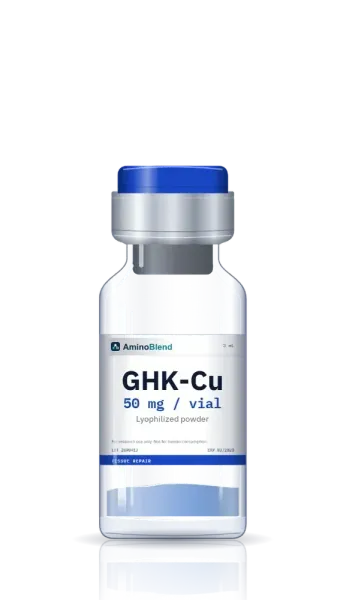
Warning signs include a cake that has collapsed into a sticky film, a solution that has turned cloudy or grown particles, or an unexpected colour change. GHK-Cu is blue from its copper, so judge it against its own certificate rather than the white cakes of other peptides. When in doubt, compare the vial with the appearance recorded for its lot in the COA library.
Mark the mixing date, the diluent used and the concentration on the label, beside the printed lot number. Our reconstitution walkthrough explains how to arrive at that concentration figure.
Not during transit, but they should go into cold storage once they arrive. A sealed lyophilised vial tolerates a few days at room temperature, which is why domestic orders travel without ice packs. Use the fridge at 2 to 8 °C if you will open the vial within a few weeks, and the freezer at -20 °C for anything longer. Keep it dry and dark either way.
Roughly four weeks, provided the diluent was bacteriostatic water and the vial stays at 2 to 8 °C in the dark. Made with sterile water, which has no preservative, plan on a few days. Sequences containing methionine, cysteine or tryptophan can lose quality sooner. For a stock that must outlast four weeks, divide it into single-use aliquots and freeze them the same day you mix it.
It is best avoided. Each freeze and thaw concentrates the peptide into pockets of liquid between ice crystals, which encourages aggregation and loss of recovery. The fix is to freeze small single-use aliquots, thaw one at a time and discard any leftover. A multi-draw vial made with bacteriostatic water should stay in the fridge and never go back into the freezer.
Lyophilised peptides keep longest at -20 °C, with 2 to 8 °C suitable for a few weeks. Reconstituted solutions belong at 2 to 8 °C, never at room temperature for more than a few hours. Frozen aliquots go back to -20 °C. A steady temperature matters as much as the number itself, so avoid fridge doors and frost-free freezers where possible.
Shop for both online at AminoBlend, which holds lyophilised research peptides in sealed vials, bacteriostatic water in 3, 10 and 30 mL sizes and 0.6% acetic acid in Australian stock. Buy the vials and the diluent in one order so the whole set goes into storage together, and check each lot's certificate in the COA library. All products are for laboratory research only.
10 mg vial
