
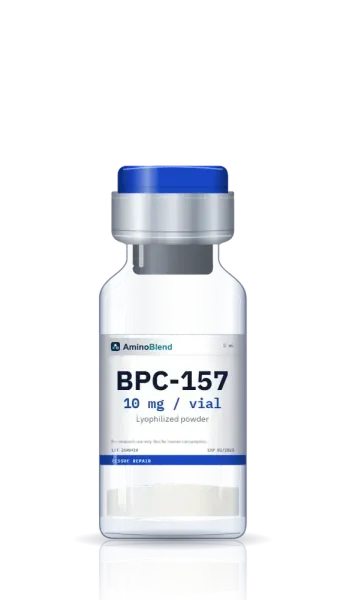
BPC-157
From $69
Research use only. AminoBlend supplies research compounds for laboratory and in-vitro use, not for human or animal consumption. By continuing you confirm you are 18 or older and buying for research.

10 mg vial
10 mg vial
10 mg vial
Buy peptide capsules online in Australia in two lines: BPC-157 at 500 mcg a capsule and SLU-PP-332 at 250 mcg a capsule, each in a 60-count bottle from Australian stock. An outside laboratory checks every capsule lot before we sell it, and this page is frank about which of the two is worth buying as an oral format and which is usually better bought as a vial.
| Product | Per capsule | Bottle | Also sold as |
|---|---|---|---|
| BPC-157 capsules | 500 mcg | 60 capsules, child-resistant cap | 10 mg lyophilized vial |
| SLU-PP-332 capsules | 250 mcg | 60 capsules, child-resistant cap | 5 mg lyophilized vial |
Both bottles are labelled with lot number and expiry. Store them closed, below 25 °C, somewhere dry and dark, since moisture is what degrades a solid format.
Most peptides are broken down in the stomach, which is why nearly everything in this field is sold as an injectable vial. BPC-157 is the exception. It is a 15 amino acid sequence (GEPPPGKPADDAGLV) taken from a protein in human gastric juice, and Professor Predrag Sikiric's group in Zagreb describes it as a "stable gastric pentadecapeptide" that remains intact in human gastric juice for more than 24 hours. Their rat studies have given it orally in drinking water as well as by injection.
That stability is the reason BPC 157 capsules are a legitimate research format rather than a novelty, and the reason we supply BPC-157 as capsules at all.
Each bottle holds 60 capsules of 500 mcg BPC-157 under a white child-resistant cap. The capsules need no reconstitution and no diluent, which suits study designs that call for a fixed, pre-measured oral amount. For work in solution, where you set the concentration, the 10 mg BPC-157 vial is the better choice.
Check the regulations before you buy: BPC-157 moved into Schedule 4 of the Poisons Standard on 1 June 2024, and the TGA listed it in an April 2026 safety alert. Our guide on what BPC-157 is covers its research history.
SLU-PP-332 is not a peptide at all: it is a small molecule that switches on all three estrogen-related receptor subtypes, ERR alpha, beta and gamma. We sell it as capsules because it is stable as a dry solid, but stability on the shelf is not the same as absorption. In a 2026 paper in the Journal of Pharmacology and Experimental Therapeutics (Billon, Appourchaux, Côté and Burris), the laboratory that developed SLU-PP-332 states that it lacks oral bioavailability, and presents SLU-PP-915 as an orally active successor.
Our recommendation: for most work, choose the 5 mg SLU-PP-332 vial rather than the capsules, and buy the capsules only when your design specifically needs to examine the oral route. We compare the two in SLU-PP-332 capsules vs vial, and the compound itself in what is SLU-PP-332.
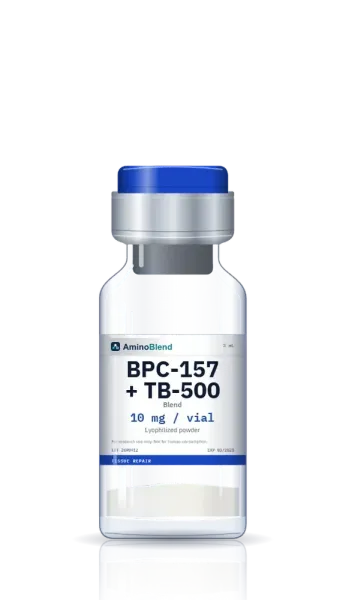
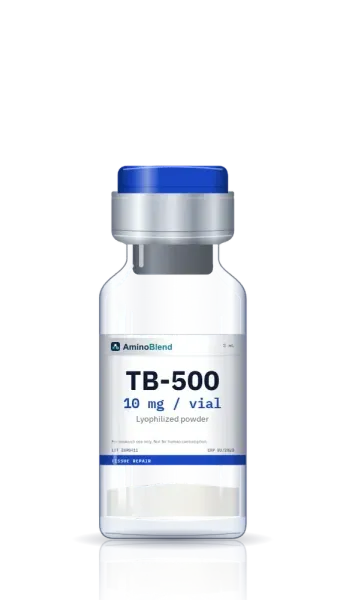
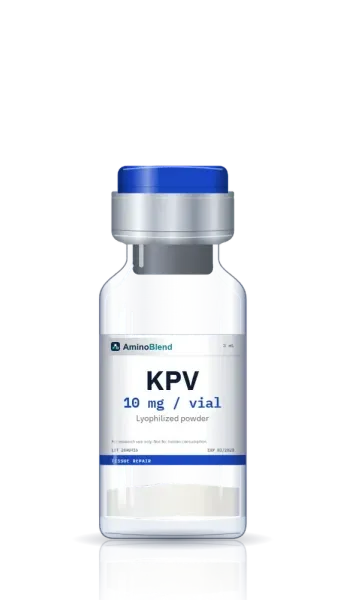
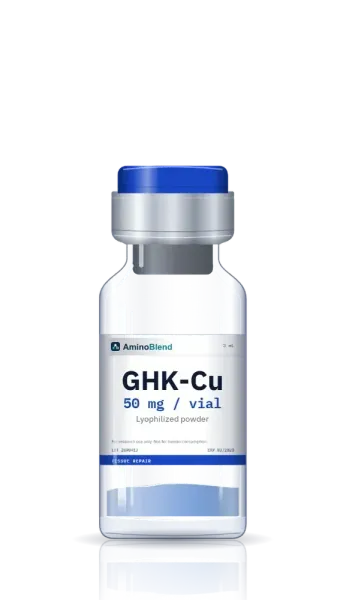
AminoBlend does not sell BPC-157 and TB-500 capsules. TB-500 has no gastric-stability data comparable to BPC-157's, so we supply the pair only as the Wolverine Blend vial, or as separate TB-500 and BPC-157 vials. TB-500, KPV and GHK-Cu are vial-only as well. Buy the 10 mg KPV vial for inflammatory signalling work, where its three-residue sequence is easy to track, and choose GHK-Cu at 50 or 100 mg for copper peptide studies; both sit in our tissue repair and skin ranges.
| Capsules | Lyophilized vial | |
|---|---|---|
| Form | Pre-measured solid | Freeze-dried powder |
| Preparation | None | Reconstitute with bacteriostatic water |
| Amount | Fixed per capsule | Concentration set by diluent volume |
| Storage | Below 25 °C, dry and dark | Frozen at minus 20 °C for long storage, fridge after mixing |
| Makes sense for | BPC-157 oral-route studies | Everything else |
Each capsule batch is sent to an outside laboratory for a mass spectrometry identity check and an HPLC purity figure before it goes on sale. Type the code from the bottle label into the certificate search to open that batch's report, and see quality and testing for how lots are released. Volume buyers can use wholesale. Our lab tested peptides page explains how a capsule certificate differs from a vial one.
Searching for peptide capsules near me tends to bring up pharmacies and supplement shops, and none of them stock research-grade BPC-157 or SLU-PP-332. You do not need a local shop: both bottles are held in Australian stock and sold online to researchers anywhere in the country, with the same lots and certificates on every order. Add the capsules to your cart, and if your design also needs a solution, buy the matching vial and a bottle of bacteriostatic water at the same time.
Our capsules are sold as laboratory reagents only. No bottle is intended for human or animal consumption, and staff will not advise on dosing.
Lists of the best oral peptides for weight loss mix very different compounds. Most peptides are digested before they can act, which is why oral formats are rare. Of our capsules, SLU-PP-332 is a small molecule studied in metabolic and exercise models, and BPC-157 is unusually stable in gastric conditions. Neither is a weight loss product, and both are sold for laboratory research only.
Our shortlist is short on purpose. The best oral peptide for a study is one with data showing it survives the stomach, and in our range that is BPC-157 alone, at 500 mcg a capsule and $79 for 60. SLU-PP-332 capsules are the second oral line, but as a small molecule with reported poor oral bioavailability they are a tool for testing the oral route, not a default. Best peptide capsules lists that include dozens of compounds usually ignore the digestion problem altogether.
For fat loss models, the incretin compounds in our range, tirzepatide and retatrutide, are vial or pen products; there is no retatrutide pill in any trial, as our retatrutide pill guide explains, and the only oral GLP-1 peptide in clinical use is a prescription medicine outside our range. For muscle growth models, the growth hormone secretagogues such as ipamorelin and CJC-1295 are digested too readily for a capsule to make sense, so the best oral peptide for muscle growth research is, in practice, not an oral peptide at all. We would point those studies to vials in the growth hormone peptides range.
Searches for oral peptides for skin, peptide capsules for skin or peptides for skin tablets mostly lead to collagen supplements, which are food products made of hydrolysed collagen, not single research peptides. Our guide to collagen peptides covers that category, and the peptides for skin guide covers the cosmetic peptides in serums. GHK-Cu, the main skin research peptide, is sold by us only as a vial.
Products sold over the counter as oral peptides for weight loss are supplements, and reviews of them, including lists of the best oral peptides for weight loss for females or for women, describe personal experience rather than controlled measurement. We do not sell or assess supplements. For other formats that avoid reconstitution, the peptide nasal sprays are the alternative, and the full catalogue is on our peptides for sale in Australia page. Planning to combine a capsule line with a vial? Compare pairings on the peptide stacks page, then shop the full range online.
The arithmetic is simple because every capsule carries the same amount. A BPC-157 bottle holds 60 capsules at 500 mcg, or 30 mg of BPC-157 in total, three times the fill of the 10 mg vial. A SLU-PP-332 bottle holds 60 capsules at 250 mcg, which comes to 15 mg, against 5 mg in the SLU-PP-332 vial.
With a lyophilised vial the researcher chooses how much bacteriostatic water to add, and that choice sets the concentration of every draw. A capsule removes the choice: each one carries its stated 500 mcg or 250 mcg and cannot be split accurately. That suits a design built on fixed oral units and rules capsules out for work that needs a range of concentrations. The BPC-157 listing and the SLU-PP-332 listing show both formats side by side.
An oral format is only worth studying if the compound survives the stomach. BPC-157 has published rat work in which it was given in drinking water, backed by data on its stability in gastric juice. SLU-PP-332 is the reverse case: its own developers report that it lacks oral bioavailability, so its capsules belong only in studies that set out to test that route.
The BPC-157 and SLU-PP-332 bottles are a dry solid format, and their enemy is humidity rather than warmth. Keep the child-resistant cap closed between uses, store the bottle below 25 °C somewhere dark, and do not move it in and out of a fridge, where condensation can form inside. There is nothing to reconstitute and no 28 day clock to track.
Each bottle label shows a lot code and an expiry date. Enter the lot code in the COA library and confirm the certificate names the same compound and the 500 mcg or 250 mcg strength, with a mass spectrometry identity result and an HPLC purity figure for that capsule lot.
AminoBlend sells them through its website and holds BPC-157 capsules in Australian stock at 500 mcg a capsule and 60 to a bottle for $79. Each capsule lot has its own certificate in the COA library, so you can check identity and purity before you order. If your study also needs a solution, the 10 mg BPC-157 vial is sold on the same page.
Because BPC-157 is unusually stable in stomach conditions. It comes from a protein in human gastric juice, and published work from Sikiric's group reports it staying intact in human gastric juice for more than 24 hours, whereas most peptides are quickly broken down there.
According to its developers, no. A 2026 paper from the Burris laboratory in the Journal of Pharmacology and Experimental Therapeutics states that SLU-PP-332 lacks oral bioavailability. For most research the 5 mg vial is the better choice, and the capsules suit only studies that set out to examine the oral route.
No. AminoBlend does not sell a BPC-157 and TB-500 capsule. The two are available together as the Wolverine Blend, a 10 mg lyophilized vial, or as separate BPC-157 and TB-500 vials. BPC-157 on its own is available as capsules.
In our range, BPC-157 capsules are the oral peptide with the strongest case, because published work shows BPC-157 remains intact in gastric juice for more than 24 hours. Each capsule holds 500 mcg, 60 to a bottle. SLU-PP-332 capsules suit only studies of the oral route itself, since its developers report it lacks oral bioavailability.
No. Our only capsule lines are BPC-157 and SLU-PP-332. GHK-Cu, the peptide most studied in skin research, is sold only as a 50 mg or 100 mg lyophilised vial, along with the GLOW and KLOW blends. Capsules or tablets marketed for skin are usually collagen supplements, which are food products rather than research reagents.