
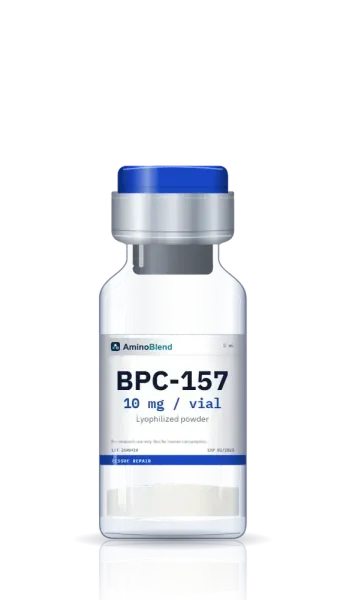
BPC-157
From $69
Research use only. AminoBlend supplies research compounds for laboratory and in-vitro use, not for human or animal consumption. By continuing you confirm you are 18 or older and buying for research.
Research on glutathione for skin centres on one question: does it lower melanin? Small randomised trials of oral and topical glutathione found modest, temporary reductions in the melanin index, while the evidence for intravenous glutathione is thin and regulators in the Philippines and the United States have warned against injectable skin-whitening products. This guide summarises what the studies actually measured.
Glutathione is a tripeptide (gamma-glutamyl-cysteine-glycine) and the most abundant small thiol antioxidant inside animal cells. Our explainer on what glutathione is and how it works covers the chemistry. Its link to skin comes from melanin synthesis in melanocytes, which depends on the copper enzyme tyrosinase.
Review authors describe several proposed routes by which glutathione could reduce pigmentation: inhibiting tyrosinase, quenching the free radicals that stimulate melanogenesis, and shifting production from dark brown-black eumelanin toward lighter red-yellow pheomelanin, since the thiol group of cysteine is incorporated into pheomelanin. Sonthalia and colleagues' 2018 review in Dermatology Practical and Conceptual, "Glutathione for skin lightening: a regnant myth or evidence-based verity", stresses that these mechanisms are not fully worked out. That caution should frame everything below.
L-glutathione is simply the naturally occurring form of the molecule; "L glutathione for skin" and "glutathione for skin" refer to the same compound. The oral trials are the largest body of evidence:
Sarkar and colleagues' systematic review in the International Journal of Dermatology (2025) counted five randomised trials and one open study of oral glutathione at 250 to 500 mg a day showing significant melanin index reductions versus placebo, and concluded the effect is moderate and not sustained after stopping.
The key topical study is Watanabe and colleagues, Clinical, Cosmetic and Investigational Dermatology, 2014: a double-blind, placebo-controlled, split-face trial in 30 healthy Filipino women who applied a 2% oxidised glutathione (GSSG) lotion to one side of the face for 10 weeks. The melanin index fell significantly on the treated side, and moisture and smoothness measures improved.
A later double-blind trial by Wahab and colleagues (International Journal of Dermatology, 2021) combined topical and oral glutathione, and the 2025 Sarkar review reported the combination outperformed either alone. Topical effects are local to where the product is applied, which is the trade-off against oral use's whole-body but still modest result.
Despite how heavily IV glutathione is marketed for skin whitening, there is essentially one controlled trial. Zubair and colleagues, in the Journal of Pakistan Association of Dermatologists, enrolled 50 women and analysed 32, comparing 1,200 mg IV glutathione twice weekly for six weeks against saline. More participants in the glutathione arm reported lighter skin, but the effect faded after treatment stopped, and adverse events including abnormal liver function tests were recorded. The 2018 Sonthalia review described the trial's design as dubious and its analysis as apparently flawed. The 2025 Sarkar review went further and concluded that IV glutathione is contraindicated for skin lightening given the lack of efficacy and the side effects.
For the full adverse-event picture across routes, see our separate guide to glutathione side effects.
Australia. In 2020 the TGA told the ABC that it "has not considered the use of glutathione for skin lightening/whitening purposes". The list of permitted indications for listed medicines contains no indication referring to skin lightening or skin whitening, and the TGA said no application had been made to add one. In practice, that means a listed glutathione supplement in Australia cannot lawfully claim to whiten skin. We did not find a TGA safety alert specific to injectable glutathione at the time of writing.
Philippines. FDA Philippines Advisory No. 2019-182, "Unsafe use of glutathione as skin lightening agent", states that injectable glutathione is approved there only as an adjunct in cisplatin chemotherapy, not for skin lightening, and lists reported concerns including toxic effects on the liver, kidneys and nervous system and the possibility of Stevens-Johnson syndrome.
United States. The US FDA's consumer update "Injectable Skin Lightening and Skin Bleaching Products May Be Unsafe" warns that such products, some containing glutathione, are potentially unsafe and ineffective and may contain unknown ingredients or contaminants.
People searching "glutathione for skin whitening chemist warehouse" are usually looking for an oral supplement or a cream. Those are consumer products regulated as listed medicines or cosmetics, and, as above, Australian listed medicines cannot carry whitening claims. AminoBlend does not sell supplements, creams or anything intended for skin application.
Our glutathione research vial is a 1,500 mg lyophilized fill of reduced L-glutathione for laboratory work: redox assays, cell culture antioxidant controls and melanogenesis models in vitro, for example. It is not a cosmetic or a supplement. Labs working on skin biology often pair it with copper peptides from our skin and cellular research range, such as GHK-Cu, which has its own literature on collagen and wound models.
Labs that want the molecule itself, rather than a whitening product, can buy reduced L-glutathione as a 1,500 mg research vial for $69. One vial holds enough material for many melanin assays and antioxidant controls, and an independent laboratory confirms each lot's identity and purity, with the report listed in our COA library. Pigmentation projects often buy Melanotan 1 or GHK-Cu to run alongside it as comparison compounds. We hold every one of them in Australian stock and sell them online to labs only. Buy the vial online, keep it frozen, and reconstitute it run by run.
Reduced glutathione oxidises in solution, so reconstitute only what a run needs and keep it cold; our storage guide covers the basics. AminoBlend supplies glutathione for laboratory research use only. It is not for human or veterinary use, and nothing here is advice on skin treatment.
Small randomised trials suggest oral and topical glutathione can modestly reduce the melanin index, but effects were limited to some measured sites and faded after stopping. A 2025 systematic review in the International Journal of Dermatology called the effect moderate and unsustained, and concluded IV glutathione should not be used for lightening.
L-glutathione is the same molecule studied in the skin trials. The oral studies at 250 to 500 mg a day found modest melanin index reductions versus placebo, not dramatic whitening, and the effect did not persist after the studies ended. In Australia, listed medicines cannot carry skin whitening claims.
No. In 2020 the TGA said it had not considered glutathione for skin lightening or whitening, and the permitted indications for listed medicines include no skin lightening or whitening indication. No application had been made to add one at that time.
Regulators have warned against them. The Philippine FDA's 2019 advisory said injectable glutathione is not approved for skin lightening and cited possible liver, kidney and nervous system effects, and the US FDA has warned injectable whitening products may be unsafe and contaminated. The only controlled IV trial reported adverse events.
Our online store lists reduced L-glutathione as a single 1,500 mg freeze-dried vial priced at $69, kept in Australian stock. It is a laboratory reagent for redox and melanogenesis research, not a supplement, cream or injectable product, and it carries an independent identity and purity certificate matched to the lot number on the label. Do not buy it for skin lightening or any personal use.
10 mg vial
